

Rice Straw Utilization: A Smart Choice for Energy, Feed, and Soil Improvement | Zarea
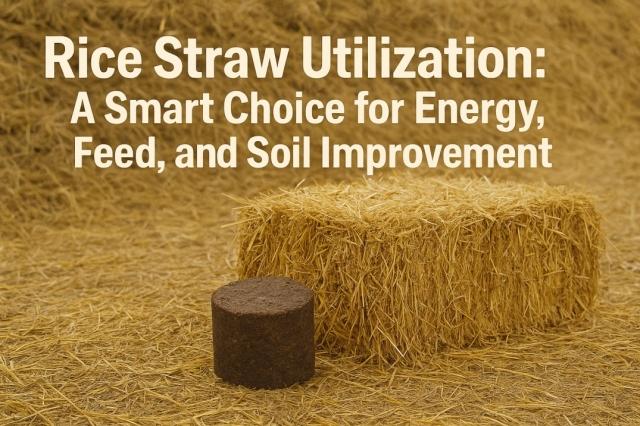
Rice straw is one of agriculture's most abundant residues, frequently left in fields after harvest. Traditionally considered waste, rice straw is now recognized as a versatile resource with strong potential to improve farm incomes, supply renewable energy, and boost soil health. Smart management and value-adding practices turn a disposal problem into multiple profitable opportunities for farmers, processors, and the wider rural economy.
Turning waste into energy
One of the highest-value uses for rice straw is as a bioenergy feedstock. Rice straw has predictable moisture and calorific properties that make it suitable for combustion, briquetting, and conversion into biochar or biogas. Small-scale briquetting transforms loose straw into dense, transportable fuel blocks that can replace wood or charcoal for cooking and heating — reducing deforestation pressure and cutting household energy costs. On a larger scale, co-firing rice straw with coal in power plants or converting it in biomass gasifiers can provide renewable power to local grids and industries.
Bioenergy projects also create local jobs: collection, baling, briquetting, and transport all generate income streams along the value chain. For farmers who struggle with low margins on grain, selling baled straw or contracting to biomass producers offers a steady supplementary revenue source.
Feed: unlocking nutritional value with the right treatment
Raw rice straw is low in protein and high in silica, which limits its digestibility for livestock. However, treated or processed rice straw can be a cost-effective roughage source for cattle, buffalo, and small ruminants. Simple treatments — such as urea ammoniation, silage fermentation, or alkaline (lime/ash) treatment — can significantly raise straw digestibility and nutrient availability.
When combined with legume forages or protein supplements, treated rice straw becomes a practical feed component during lean seasons. This reduces farmers' reliance on expensive commercial feeds and helps maintain animal productivity year-round. Cooperative initiatives or local feed processors can scale these treatments, making improved straw feed more accessible to smallholders.
Soil improvement and carbon sequestration
Incorporating rice straw back into farmland — either directly or as compost/biochar — benefits soil structure, water retention, and long-term fertility. Composting rice straw with manure and green residues produces stable organic matter that slowly releases nutrients and supports beneficial soil microbes. Biochar produced from pyrolyzed rice straw is particularly valuable: it increases soil aeration, improves cation exchange capacity, and sequesters carbon for decades.
These practices combat soil degradation common in intensively cropped systems. Over time, fields with improved organic matter show better resilience to drought and reduced need for chemical fertilizers — lowering input costs and environmental impact.
Environmental and policy benefits
Avoiding open-field burning of rice straw reduces air pollution and greenhouse gas emissions. Many regions suffer severe seasonal smog when straw is set on fire; diverting straw into energy, feed, or soil projects mitigates this problem and aligns agriculture with public health goals. Policymakers can accelerate adoption by incentivizing straw collection, supporting briquetting and bioenergy plants, and funding extension services that teach straw treatment and composting methods.
Practical steps for farmers and entrepreneurs
-
Assess quantity and logistics: Map harvest volumes, storage locations, and transportation needs. Collective action (farmer groups) eases logistics.
-
Choose value chains: Decide whether to sell baled straw, start briquetting, provide treated feed, or make compost/biochar. Small pilot projects reduce risk.
-
Access equipment & training: Seek local suppliers for balers, briquetting units, or pyrolysis kilns and get hands-on training for straw treatment methods.
-
Link to markets: Build relationships with local energy producers, livestock cooperatives, or soil-amendment buyers to secure off-take agreements.
For support in sourcing materials, equipment, or connecting with buyers, platforms like Zarea Limited can be helpful. Explore options and supplier listings at Zarea Limited to find relevant products and business contacts. For more detailed product categories and procurement support, visit Zarea Limited.
Conclusion
Rice straw is no longer just an agricultural nuisance — it's a multi-purpose resource. When collected and used thoughtfully, rice straw provides clean energy, improves livestock nutrition, enriches soils, and contributes to climate mitigation. With simple investments in treatment and logistic systems, farmers and rural entrepreneurs can turn straw into steady income while delivering environmental and social benefits to their communities.